Shared roots
In the modern evolution of the Chinese energy arts, the terms Daoyin and Qi Gong are often used as synonyms. In reality, although closely linked, they refer to two practices with different characteristics and origins. Knowing the difference helps us better understand the value of both.
Both Qi Gong and Daoyin come from the ancient Chinese tradition, which has always regarded body, breath and mind as a single whole. Both disciplines rest on the same principles.
Daoyin: the ancient origin
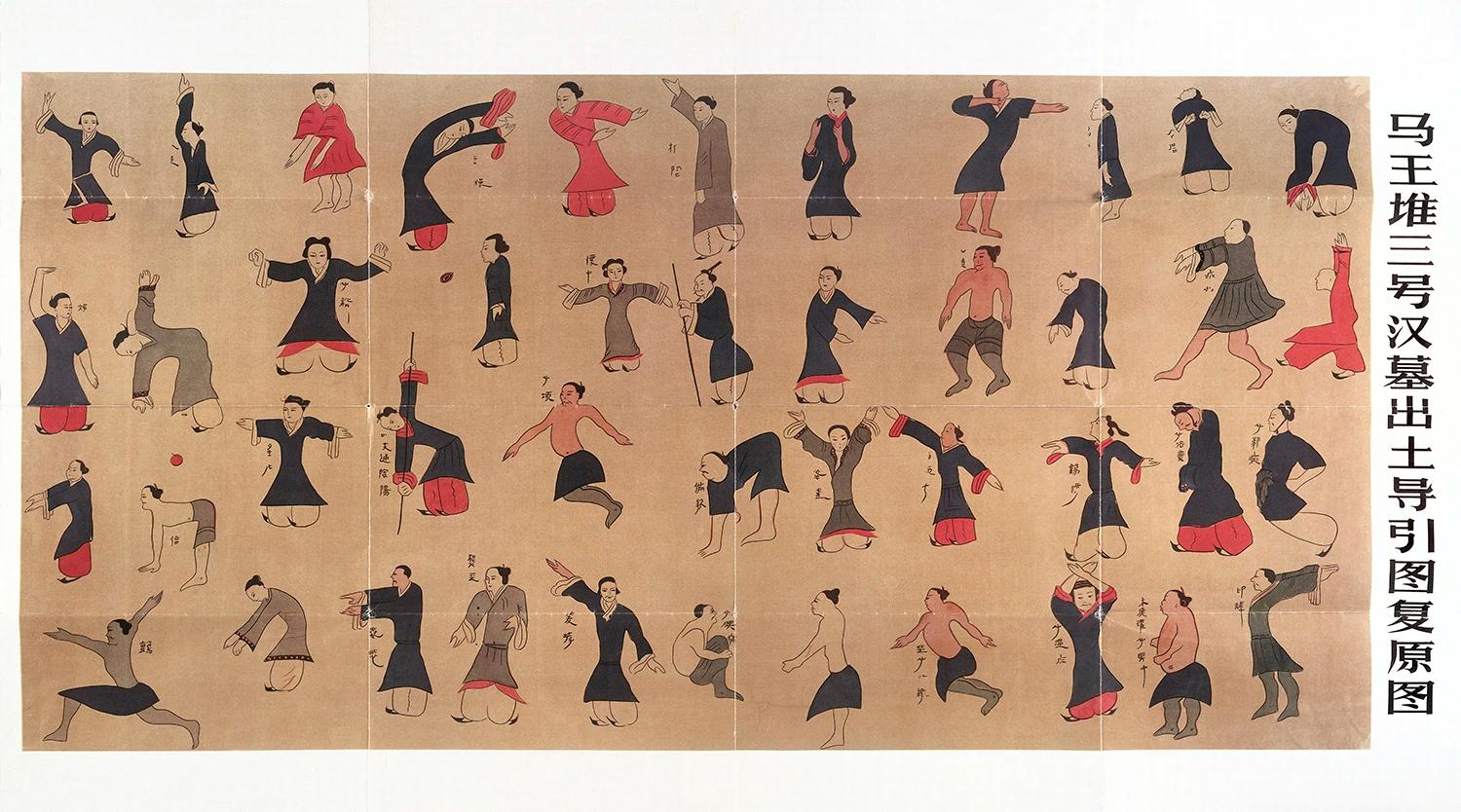
The term Daoyin means “to guide and lead energy”. It is a very ancient practice, already documented in the medical texts of classical China, and it is one of the original foundations of Qi Gong in its modern evolution.
Daoyin stands out for its systematic, therapeutic approach, which combines breathing exercises, slow and coordinated movements, self-massage, sequences to harmonise the internal organs and the use of traditional implements (such as the sword, sabre and fan).
In this sense, Daoyin retains a more structured and methodical framework, closely tied to Traditional Chinese Medicine (TCM).
The term Qi Gong is more recent: it spread in China in the 1970s, when the government launched official programmes to promote energy practices for public health. Qi Gong gathers, codifies and renews many traditional practices, including Daoyin, making them more accessible and widespread in the West as well.
In its modern evolution, Qi Gong refers to a wide range of exercises combining movement, breath and mental focus.
It is widely practised as a tool for physical and mental wellbeing, inner centring and disease prevention.